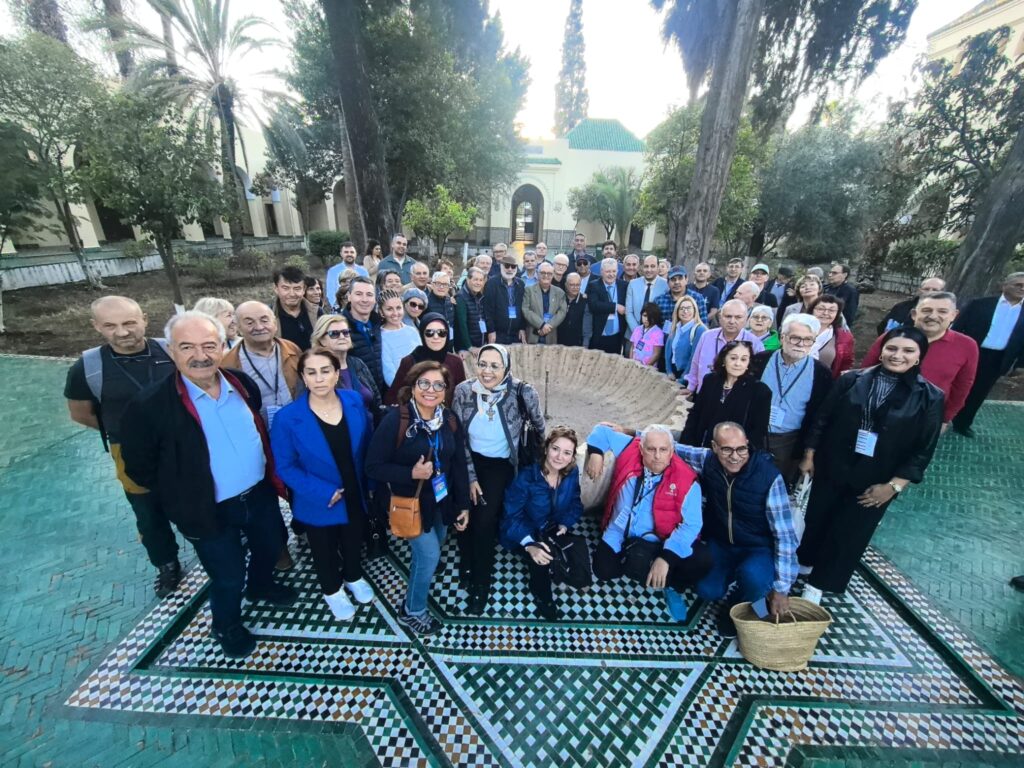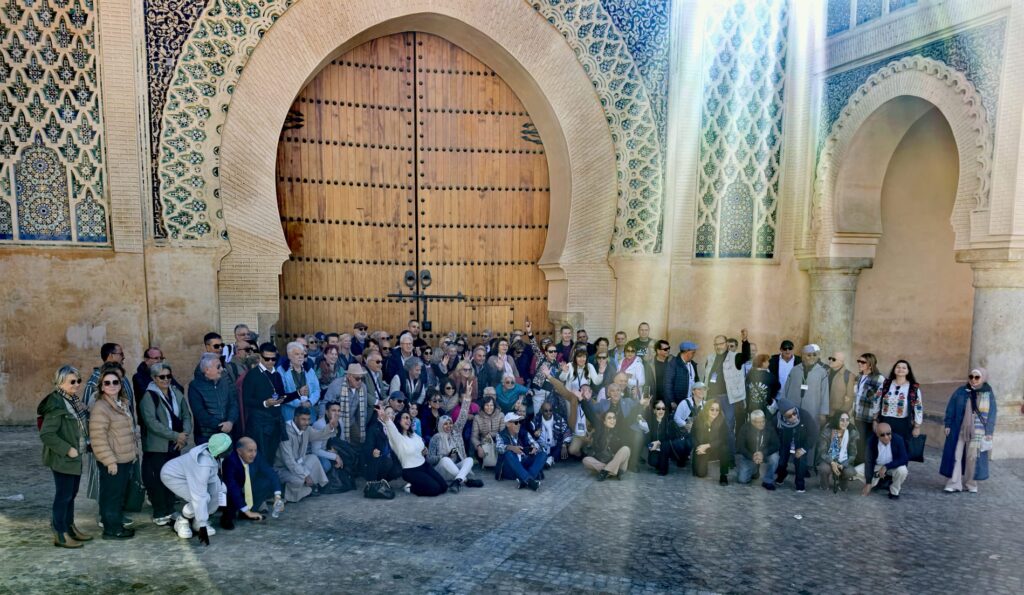
FIJET Morocco picked the perfect spot for international colleagues who participated Fijet Congress 19-24 November, 2025.
Fez is one of Morocco’s oldest cities, is distinguished by its rich cultural and historical heritage, making it a must-see destination. Founded in the 9th century, it was the intellectual and spiritual center of the Arab-Muslim world, attracting renowned scholars, poets, and philosophers. Renowned for its artisanal traditions and vibrant academic life, Fez is home to one of the world’s oldest universities, Al Quaraouiyine University, recognized by UNESCO as a World Heritage Site.
The medina of Fez, with its labyrinthine alleyways, is a veritable open-air museum. Moreover, the city is a crossroads between the past and the present where visitors can enjoy refined Moroccan gastronomy, with traditional dishes that reflect the region’s culinary heritage. Fez is, without a doubt, a city that promises fascinating discoveries around every corner, reinforcing its status as a pearl of Morocco to visit during the Congress.
Medina was the first authentic place that all participants and delegations were visiting. a historic city classified as a UNESCO World Heritage Site since 1981, recognized as one of the largest and best preserved in the Arab-Muslim world.
The tour included a rich culinary exploration combined with a discovery of the architecture of the medina’s houses, including the unique Al FASSIA restaurant, nestled in the heart of the historic alleyways, over 9,000 narrow streets and the medina is home to several exceptional monuments, such as the Mausoleum of Moulay Idriss, the Qarawiyin Mosque, and numerous riads, some of which have been converted into guesthouses, luxury hotels, and restaurants.
What struck us most about this visit was the “awakening of the senses” that you feel in every corner, every color. When you explore the largest medina in the world, you feel your self moved by the kindness of its inhabitants and their love and attachment to their roots, of which they are very proud…a huge amount of respect to all.
The visit concluded with a return to the classroom, but from a different perspective and a new dimension: a surprise visit to the Moulay Idriss Secondary School, inaugurated in 1914, which has, over time, educated the elite of Moroccan society.
Meknes, was our next visit. Located in north-central Morocco, is one of the country’s four Imperial cities, alongside Fes, Marrakesh, and Rabat. Founded in the 11th century by the Almoravids as a military settlement, it rose to prominence in the 17th century under Sultan Moulay Ismail (Alaouite dynasty), who transformed it into a grand capital. Today, Meknes is renowned for its rich history, architectural marvels, and cultural heritage.
Meknes’s name origins trace back to Zanātah tribe of the Meknassa Imazighen (Berbers) as Meknassa al-Zaytūn (“Meknès of the Olives”). The city gained prominence in the 17th century when Sultan Moulay Ismail made it his capital, constructing extensive fortifications, palaces, and gardens, aiming to rival the grandeur of Versailles.
Meknes is often referred to as the “Versailles of Morocco” due to its opulent palaces, monumental gates, and sprawling gardens. The city’s medina, a UNESCO World Heritage Site since 1996, is a living testament to its rich heritage, blending Islamic and European influences. As you wander through its ancient streets, you’ll feel the echoes of a bygone era, where sultans ruled and artisans crafted masterpieces. While explore Meknes, you’ll discover a city that has preserved its authenticity while welcoming modern influences. Its historical significance, combined with its unique charm, makes it a captivating destination for travelers seeking a deeper connection to Morocco’s imperial past.
We discovered Ifrane, a unique town nestled in the Middle Atlas Mountains of Morocco. It’s often called “Little Switzerland” because of its European-style architecture, cool climate, and picturesque landscapes. Unlike many other Moroccan cities, Ifrane is peaceful, with fresh mountain air and charming streets lined with cedar trees.
The nearby Ifrane National Park, home to the famous cedar forests and the rare Barbary macaque is a major draw for nature lovers. After these visits, the congress ended with a gala dinner.
Post Tour with Chefchaouen, Assilah, Tangier, Tetouan is one more reason to enjoy Morocco.
On these days, November 18-24, 2025, the world was an honored guest, witnessing the authenticity and rich history, full of emotion and memorable dates in Morocco.